
Showing posts with label Healthy Super Couponing. Show all posts
Showing posts with label Healthy Super Couponing. Show all posts
Monday, April 30, 2012
Healthy Super Couponing: Jewel Doubles
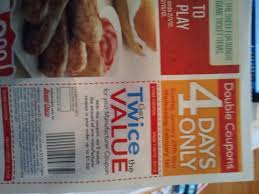
Those of you that get the Sunday paper may have noticed something different about your Jewel ad, the addition of 5 "Doubler" coupons!


Wednesday, March 2, 2011

Monday, February 21, 2011
Healthy Super Couponing- Berries Part 1
Who doesn't love berries! They are so delicious and nutritous but they can be very costly.
My favorite way to save on my favorite fruit? Buy when they are in season and/or on sale and freeze them.
My favorite way to save on my favorite fruit? Buy when they are in season and/or on sale and freeze them.
Saturday, February 12, 2011
AT&T 1000 bonus minutes
So I read this on Mashupmom.com this morning (One of my favorite super couponing sites ). Thanks Rachel!
It isn't nutrition related in any way but it goes along with the idea that if you can save money in one area of your life you can splurge a little in another like buying healthier foods.
If you have AT&T, try texting yes to 11113020 for 1000 free rollover minutes.
Worked for me! I figured it was too good a deal not to pass along.
It isn't nutrition related in any way but it goes along with the idea that if you can save money in one area of your life you can splurge a little in another like buying healthier foods.
If you have AT&T, try texting yes to 11113020 for 1000 free rollover minutes.
Worked for me! I figured it was too good a deal not to pass along.
Monday, February 7, 2011
Healthy Super Couponing- My Favorite Sites

A few years back a friend of mine introduced me to super couponing and I have been hooked ever since. Super couponing is a practice of combining a store sale with a coupon to get items for free or very inexpensively. It is also about stocking up on basics when the price is good, saving money on items that you may not otherwise be able to purchase and knowing what to buy when.
Monday, January 24, 2011
Healthy Eating on a Budget
This past weekend I took a trip to South Beach in Miami. While I love to travel it is unusual that I travel two weekends in row with only a few days at home in between.
Traveling itself can be expensive and in areas like Savannah and South Beach it can be easy to spend a lot of money on food. There are times when you want to splurge and treat yourself while on vacation but there are also ways to make little adjustments to your trip and save big.
Here are a few things that I do while traveling to try and save money while sticking to my healthy eating plan:
1.) Always eat before you head to the airport. Airport food can be expensive for sit down meals and are generally large portions at sit down restaurants. While there are less expensive options they are usually in the form of fast food and provide little nutritional value.
2.) Pack a snack for the flight. There are some healthy on-board options but it is much less expensive to bring your own and pair it with a free beverage. Nuts, trail mix, granola bars and dried fruit make excellent choices, high in protein and fiber and cost much less outside the airport.
3.) Drink 1 cup of water for every hour you are on the plane. This will keep you hydrated in a pressurized cabin and also keep you full longer.
4.) When choosing a hotel look for one that includes breakfast. One less meal to buy meals more money in your pocket for other expenses.
5.) Stock up on snacks at a local grocery store instead of visiting your hotel's gift shop.
6.) Carry around a refillable water bottle. You will find drinking fountains just about anyplace you may be traveling and by keeping a container with you you always have a free drink.
7.) Look for local coupon books especially ones with buy-one-get-one-free or complimentary items with purchase.
8.) Check out early bird specials. You can often get 25-50% off the normal menu price by eating at off peak times.
9.) Split an entree at dinner. Restaurant portions are usually quite large and if your hotel doesn't have a means of saving and reheating your leftovers consider sharing. Half of a restaurant entree paired with two side salads can make a portion correct meal while staying on budget.
10.) Go off the beaten path. Often times tourist areas are packed with restaurants charging as much as they can to visitors. Ask around and see where the locals go. You might just get a local specialty while paying significantly less than tourist trap restaurants.
How do you save money while traveling?
Traveling itself can be expensive and in areas like Savannah and South Beach it can be easy to spend a lot of money on food. There are times when you want to splurge and treat yourself while on vacation but there are also ways to make little adjustments to your trip and save big.
Here are a few things that I do while traveling to try and save money while sticking to my healthy eating plan:
1.) Always eat before you head to the airport. Airport food can be expensive for sit down meals and are generally large portions at sit down restaurants. While there are less expensive options they are usually in the form of fast food and provide little nutritional value.
2.) Pack a snack for the flight. There are some healthy on-board options but it is much less expensive to bring your own and pair it with a free beverage. Nuts, trail mix, granola bars and dried fruit make excellent choices, high in protein and fiber and cost much less outside the airport.
3.) Drink 1 cup of water for every hour you are on the plane. This will keep you hydrated in a pressurized cabin and also keep you full longer.
4.) When choosing a hotel look for one that includes breakfast. One less meal to buy meals more money in your pocket for other expenses.
5.) Stock up on snacks at a local grocery store instead of visiting your hotel's gift shop.
6.) Carry around a refillable water bottle. You will find drinking fountains just about anyplace you may be traveling and by keeping a container with you you always have a free drink.
7.) Look for local coupon books especially ones with buy-one-get-one-free or complimentary items with purchase.
8.) Check out early bird specials. You can often get 25-50% off the normal menu price by eating at off peak times.
9.) Split an entree at dinner. Restaurant portions are usually quite large and if your hotel doesn't have a means of saving and reheating your leftovers consider sharing. Half of a restaurant entree paired with two side salads can make a portion correct meal while staying on budget.
10.) Go off the beaten path. Often times tourist areas are packed with restaurants charging as much as they can to visitors. Ask around and see where the locals go. You might just get a local specialty while paying significantly less than tourist trap restaurants.
How do you save money while traveling?
Monday, January 17, 2011
Is it possible to keep a budget while getting 5 fruits and vegetables a day?
YES!
So many times I hear patients complain that fruits and vegetables are too expensive and eating 5 servings a day does not fit into their budget. Here are my tips on getting 35 servings of fruits and vegetables (5 servings day for a week) to fit into any budget.
1.) Don't make a list. When you get to the grocery store buy only what is on sale. Often stores alternate sale produce so doing this not only saves money but provides variety.
2.) Stock up on in season fruit. Don't even think about buying blueberries in the winter unless you live in an area where they are grown
3.) Pay attention to edible portion. 1# of cherries might be twice as much as 1# of melon, but the 1# raspberries has an edible portion (the amount that you actually eat once you get rid of pits, seeds, rinds, etc.) of nearly 100% where as melon is closer to 60%
4.) Eat what you buy. Wasted produce that has gone bad wastes money and nutrition. Leave bowl of fruit on the counter for a nice daily reminder.
5.) Avoid big chain grocery stores and shop at smaller fruit and vegetable markets (Stanley's, Valli Produce, Butera, etc. in the Chicago area).
Now let's put it to work. Here is what 35 servings of fruits and vegetables looks like. And the grand total? $9.58!

So many times I hear patients complain that fruits and vegetables are too expensive and eating 5 servings a day does not fit into their budget. Here are my tips on getting 35 servings of fruits and vegetables (5 servings day for a week) to fit into any budget.
1.) Don't make a list. When you get to the grocery store buy only what is on sale. Often stores alternate sale produce so doing this not only saves money but provides variety.
2.) Stock up on in season fruit. Don't even think about buying blueberries in the winter unless you live in an area where they are grown
3.) Pay attention to edible portion. 1# of cherries might be twice as much as 1# of melon, but the 1# raspberries has an edible portion (the amount that you actually eat once you get rid of pits, seeds, rinds, etc.) of nearly 100% where as melon is closer to 60%
4.) Eat what you buy. Wasted produce that has gone bad wastes money and nutrition. Leave bowl of fruit on the counter for a nice daily reminder.
5.) Avoid big chain grocery stores and shop at smaller fruit and vegetable markets (Stanley's, Valli Produce, Butera, etc. in the Chicago area).
Now let's put it to work. Here is what 35 servings of fruits and vegetables looks like. And the grand total? $9.58!

Monday, January 10, 2011
Eating Healthy on a Budget: Part 2
Frugal Grocery Shopping Tips: Maybe they aren't all for you but even choosing a few things from this list can help cut your grocery bill on unnecesary things and free up money in your food budget for healthy items.
- Stop buying snack foods. Snacks such as chips and soda can be expensive and provide little nutritional value.
- Beware of marketing traps. Stores place higher priced items at eye level shelves and on end caps since that is where you are more likely to look.
- Avoid convenience foods. Bagged baby carrots are often more than large uncut carrots and a whole cooked chicken is less than one that is already cut up. In situations like this you have to evaluate if time or money is more important at the time of purchase.
- Comparison shop. Always check the "cost per unit" on product shelves. Just because one item is in a larger package does not mean that it contains more product.
- Use coupons but only if it is an item that you need to buy anyway. Coupons don't save us money if they are used to buy a product that we don't need.
- Don't shop when you are hungry, you will likely buy more.
- Plan your weekly menu around what is on sale that week. Checking out sales ads and using the sale items to plan your meals stretches your budget further.
- Stay away from bottled water. Bottled water is costly to your budget and the environment.
- Make a list and stick to it! Resist the urge to deviate from the list unless you find a really great in-store special on an item that you know you will use.
- Learn to like leftovers. Make last night's dinner tomorrow's lunch or get creative and use meal items to recreate another dinner the next night.
Want more? Check back next week for some new ways to save money you may have never thought of!
- Stop buying snack foods. Snacks such as chips and soda can be expensive and provide little nutritional value.
- Beware of marketing traps. Stores place higher priced items at eye level shelves and on end caps since that is where you are more likely to look.
- Avoid convenience foods. Bagged baby carrots are often more than large uncut carrots and a whole cooked chicken is less than one that is already cut up. In situations like this you have to evaluate if time or money is more important at the time of purchase.
- Comparison shop. Always check the "cost per unit" on product shelves. Just because one item is in a larger package does not mean that it contains more product.
- Use coupons but only if it is an item that you need to buy anyway. Coupons don't save us money if they are used to buy a product that we don't need.
- Don't shop when you are hungry, you will likely buy more.
- Plan your weekly menu around what is on sale that week. Checking out sales ads and using the sale items to plan your meals stretches your budget further.
- Stay away from bottled water. Bottled water is costly to your budget and the environment.
- Make a list and stick to it! Resist the urge to deviate from the list unless you find a really great in-store special on an item that you know you will use.
- Learn to like leftovers. Make last night's dinner tomorrow's lunch or get creative and use meal items to recreate another dinner the next night.
Want more? Check back next week for some new ways to save money you may have never thought of!
Tuesday, January 4, 2011
Eating Healthy on a Budget: Part 1
"Healthy foods are too expensive"
"I can't afford fresh fruits and vegetables"
These are things that I hear people say all of the time. I am here to show you that healthy foods can be affordable. First let's look at the basics.
Eating Healthy on a Budget:
- Create a budget and stick to it
- Plan your meals and snacks ahead of time
- Organize before you shop
- Look for in-store specials
- Use coupons (more on that to come)
- Buy fresh fruits and vegetables in season
- Summer: melon, corn, tomatoes, peaches, berries
- Fall: Squash, apples, pumpkin
- Winter: Oranges, grapefruit, apples and grapes
- Spring: Strawberries
- Eat frozen or canned fruits and vegetables when fresh ones cost more. Drain and rinse canned fruits and vegetables to get rid of salt or sugar
- Buy powdered milk, it can be rehydrated when needed and stores in the pantry much longer than fresh milk does in the refrigerator
- Stock up on whole grain bread when they are on sale and freeze the extras
- Buy beef, chicken or fish in large quantities and portion before freezing
- Try meatless protein sources like beans and tofu, usually less expensive and a nice alternative to your weekly menu
- Choose fruit, small pieces of cheese or nuts for snacks. Small amounts will fill you up more than chips and soda and provide needed nutrition
Check back next Monday for Part 2!
"I can't afford fresh fruits and vegetables"
These are things that I hear people say all of the time. I am here to show you that healthy foods can be affordable. First let's look at the basics.
Eating Healthy on a Budget:
- Create a budget and stick to it
- Plan your meals and snacks ahead of time
- Organize before you shop
- Look for in-store specials
- Use coupons (more on that to come)
- Buy fresh fruits and vegetables in season
- Summer: melon, corn, tomatoes, peaches, berries
- Fall: Squash, apples, pumpkin
- Winter: Oranges, grapefruit, apples and grapes
- Spring: Strawberries
- Eat frozen or canned fruits and vegetables when fresh ones cost more. Drain and rinse canned fruits and vegetables to get rid of salt or sugar
- Buy powdered milk, it can be rehydrated when needed and stores in the pantry much longer than fresh milk does in the refrigerator
- Stock up on whole grain bread when they are on sale and freeze the extras
- Buy beef, chicken or fish in large quantities and portion before freezing
- Try meatless protein sources like beans and tofu, usually less expensive and a nice alternative to your weekly menu
- Choose fruit, small pieces of cheese or nuts for snacks. Small amounts will fill you up more than chips and soda and provide needed nutrition
Check back next Monday for Part 2!
Friday, December 10, 2010
Healthy Super Couponing
Super couponing (the science of combining coupons with local sales) has been increasing in popularity over the last few years. While there are a lot of unhealthy items in these sales it is important to note that it is possible to stick with good choices and save money, let me show you how!
Subscribe to:
Posts (Atom)